Offering In-person and Virtual Lessons to students ages 3 to adult!
Mission Statement
My mission is to make music education engaging, accessible, and meaningful for students of all ages. Through individualized lesson plans, I guide students in developing a strong foundation in technique and musical expression, while using music theory as a key to understanding the pieces they play. I aim to inspire curiosity, confidence, and a lifelong relationship with music.

Experience
My journey as a music educator began when I was 16, teaching through a nonprofit organization called Melodeebee Music, which provided free music lessons to students across the country. What started as a fun extracurricular quickly became a true passion. I became fascinated with designing creative lesson plans and finding unique ways to explain music theory concepts — like chords and key signatures — in a way that young children could understand and enjoy.
I first began teaching family friends and relatives, and soon started working with kids in my neighborhood. Each lesson reinforced how much I loved helping students discover music. Over time, through lots of learning, trial, and error, that early volunteer work grew into the piano studio I run today.
My experience now ranges from working with children as young as three — using music-related activities and games to spark curiosity — all the way to teaching adult students, including college-level music theory. I pride myself on being adaptable and meeting each student where they are, so learning always feels supportive, engaging, and accessible.
I’m continuing to grow my studio and expand my offerings — and I feel grateful every day to be able to share a love of music with so many wonderful students.
Curriculum
One of the core foundations of my teaching is the belief that music theory should be accessible, engaging, and understandable at every age and level. Many students come to me surprised that previous teachers never taught them theory — but I see it as essential.
I often explain it like this:
You can learn to read aloud in a foreign language — sounding out the letters beautifully — but without vocabulary or grammar, you still don’t truly know what you’re saying. Music works the same way. Technique and reading skills let you play the notes, but music theory helps you understand the story behind them.
Because of this, I incorporate music theory into lessons from the very beginning, in age-appropriate and creative ways. For young students, this may look like games, visuals, and playful activities that introduce big ideas in simple language. For older students and adults, I connect theory directly to the music they are learning, so concepts like chords, key signatures, and form feel practical and meaningful — not abstract or intimidating.
My goal is for every student not just to play the piano, but to think like a musician: confident, curious, and truly connected to the music they create.
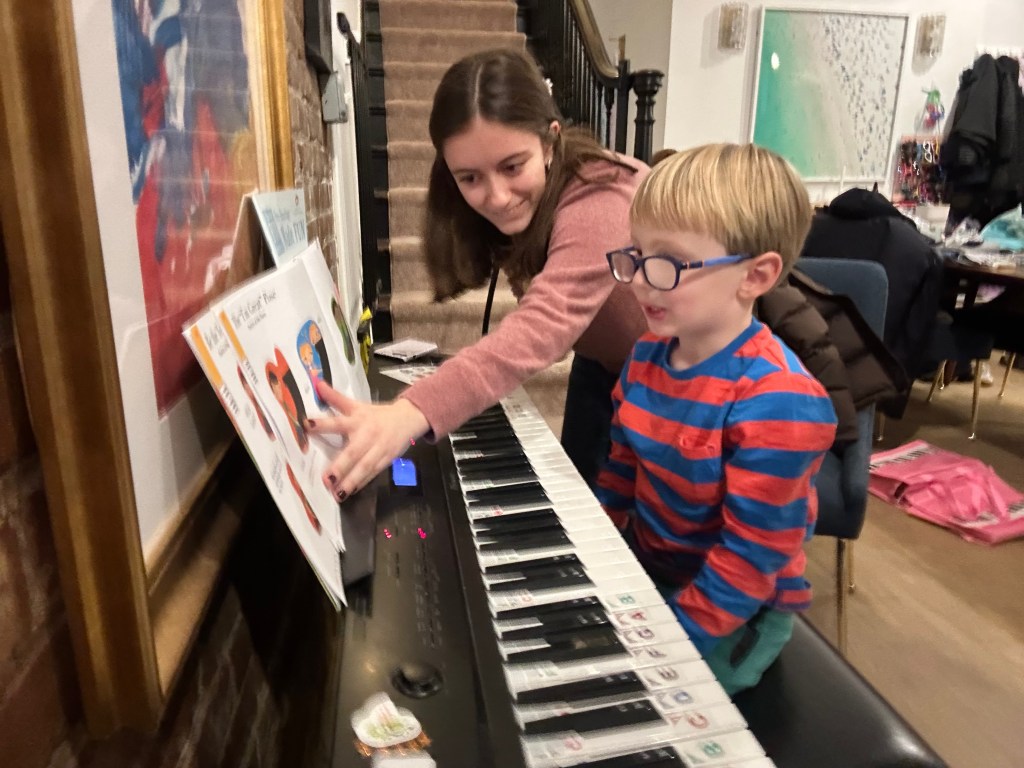
Preschool Learners
For my youngest students, ages 3–5, piano lessons are designed to be playful, imaginative, and developmentally appropriate. Lessons are either 15 minutes twice a week or 30 minutes once a week, depending on what works best for the child.
At this stage, our focus is on musical exposure, confidence, and joy. We explore rhythm, sound, and movement through music-based games, body-movement activities, puppets, and stuffed animals. These creative tools help students stay engaged while gently introducing the fundamentals of the piano — such as recognizing high vs. low sounds, basic keyboard awareness, listening skills, and musical expression.
Rather than emphasizing formal theory or structured practice, this stage is about building a strong foundation and positive relationship with music. Students begin to understand how the piano works and develop early musical awareness — so when they grow into more formal study, they already feel curious, comfortable, and excited to learn.
No practice is required at this stage — just enthusiasm, imagination, and a willingness to explore!
Standard Lessons
For students ages 6 through teenage years, lessons transition into a more traditional format that supports steady growth and musical independence. Lessons are 1 hour long, allowing enough time to build a truly well-rounded music education.
I specialize in classical piano training, so much of our lesson time is centered around developing strong classical technique, interpretation, and musicianship. However, students are always encouraged to bring in music they love — whether that’s pop, film music, or anything that excites them — to supplement and enrich our classical journey.
Each lesson includes dedicated time for:
- Technique – developing healthy hand position and dexterity
- Sight-Reading – strengthening fluency and musical literacy
- Theory – understanding the “why” behind the music
- Repertoire & Performance Skills – building confidence through classical works
- Guided Practice – learning how to practice effectively
- Rhythm Training – developing timing and confidence
Consistent practice outside of lessons is expected at this level so students can continue progressing between sessions. However, the full hour together also ensures that students who have limited time during the week can still make meaningful progress during the lesson itself — without feeling rushed or overwhelmed.
This structured approach supports students in becoming confident, expressive, and knowledgeable musicians with a strong technical and theoretical foundation — while still leaving room for personal musical interests and creativity.
Adult Lessons
Adult lessons follow a similar structure to my standard program, but they are highly flexible and tailored to each student’s goals. Some adult students want to focus on classical piano performance, while others prefer to dive deeply into music theory, music history, or composition. Lessons can be built entirely around one of these areas, or blend them together — whatever feels most meaningful and inspiring for you.
Because adults often learn differently than children, I approach adult instruction much like learning a foreign language: thoughtful, analytical, and rooted in musical understanding. Rather than relying on immersion-based methods, we take time to explore the why behind the music — including harmony, structure, style, and interpretation — so you gain a clear conceptual foundation alongside any playing skills you choose to develop.
Whether you’re a complete beginner, returning to the piano after many years, or simply curious about how music works, lessons are designed to be intellectually engaging, supportive, and personally fulfilling.
Extra Services:
In addition to standard piano instruction, I also offer a variety of specialized lessons that reflect my background as a professional composer and music educator. Students may choose to add these topics alongside piano study, or explore them as stand-alone subjects:
- Music Composition Lessons – guidance in writing original music, from simple melodies to fully developed pieces
- Pop & Jazz Basics – chord progressions, lead sheets, improvisation essentials, and stylistic playing
- Music Theory Study – from beginner through advanced, taught in a clear and engaging way
- Music History Lessons – exploring composers, styles, and the stories behind the music
Supplemental / Masterclass Lessons
Some students already study with another piano teacher but wish to receive additional coaching in specific areas — such as theory, composition, performance preparation, or help learning a particular piece of music. I’m happy to work collaboratively in this way, offering one-time sessions or short-term lesson packages to provide extra support or specialized guidance.
These services are ideal for:
- Advanced students preparing for auditions or performances
- Students seeking deeper theory instruction
- Learners interested in composition or analysis
- Anyone wanting a fresh perspective on their playing
My goal is always to complement — not replace — existing instruction and to help each student grow in the areas that inspire them most.
Testimonials
Coming soon!
Policy Document
Policy documents for lessons available upon request!
 Gabriella Cariddo